Riquewihr
The pearl of the vineyards: a fortified village almost untouched since the 16th century, surrounded by grands crus.
- Allow
- One to two hours
- Our tip
- Early in the morning or late in the afternoon, when the streets empty out.
A hundred and seventy kilometres of vineyards at the foot of the Vosges, fortified half-timbered villages and winemakers opening their cellars: the wine route is made for tasting — and we do the driving.
Tailor-made · English spoken · Free quote
The Alsace wine route runs for about a hundred and seventy kilometres, from Marlenheim, west of Strasbourg, down to Thann in the south. It passes through around a hundred wine villages at the foot of the Vosges, on hillsides that include fifty-one grands crus.
The vineyards produce mainly white wines, named after their grape variety: Riesling, Gewurztraminer, Pinot Gris, Muscat, Sylvaner, Pinot Blanc. Then there is Pinot Noir and Crémant d'Alsace. Most winemakers welcome visitors for tastings, from the great houses to small family estates.
This is exactly the kind of trip where a chauffeur comes into his own. You taste without counting the glasses, we drive you from one village to the next, and your cases of wine stay safe in the boot until you reach your hotel.
Highlights

The pearl of the vineyards: a fortified village almost untouched since the 16th century, surrounded by grands crus.

The circular village, voted France's favourite village, birthplace of Pope Leo IX, with its flower-decked lanes laid out in rings.

The fortified bridge, the castle ruins, Albert Schweitzer's birthplace, and vineyards climbing up to the forests.

The town of the minstrels and its three ruined castles, then Hunawihr and its fortified church among the vines.

The market square, its belfry and its Renaissance well, and the vineyards above the town.

Little Venice, the old town and the Unterlinden Museum, in the heart of the vineyards.
See the page →The fortified castle that overlooks the whole wine route, restored in the early 20th century.

From the great houses to family estates, every cellar pours its grape varieties and grands crus.
To taste and take home
Dry, precise, mineral. The great age-worthy wine of Alsace, best tasted from the grands crus.
Aromatic, spicy, sometimes sweet. The most recognisable of Alsace wines.
Rich and smoky, it pairs with Alsatian cooking and with foie gras.
The region's sparkling wine, the Alsatians' favourite aperitif.
Late-harvest sweet wines made from very ripe grapes, sometimes picked in November.
The only red grape of Alsace, light and fruity, increasingly popular.
Itinerary ideas
Starting points, not fixed tours: we adapt every itinerary to your dates, your pace and your interests.
Our fleet
As a couple or a group, with your suitcases and everything you buy along the way: we choose the vehicle that suits your trip.
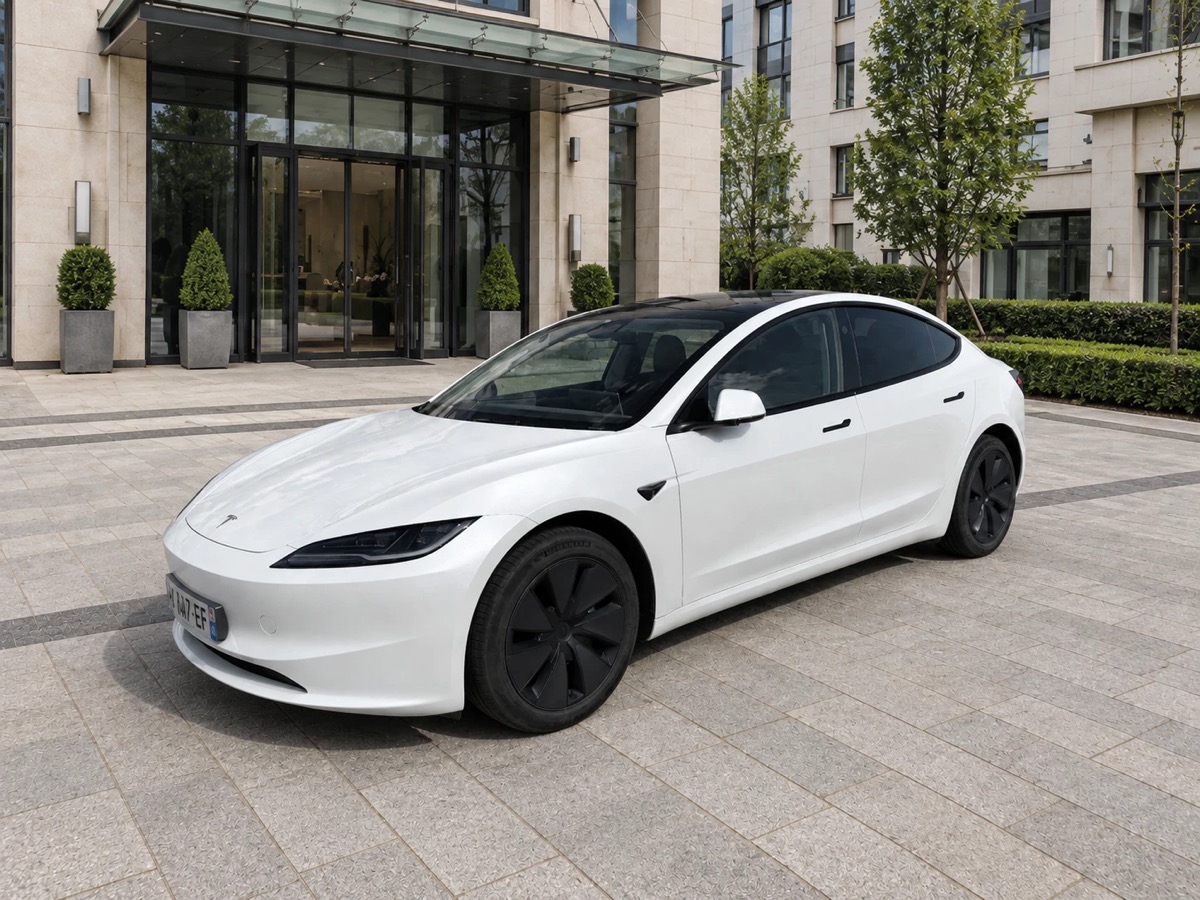
The car for couples and small parties: spacious and exceptionally quiet, with generous rear legroom. The long roads between Paris, Champagne and Alsace go by without fatigue.
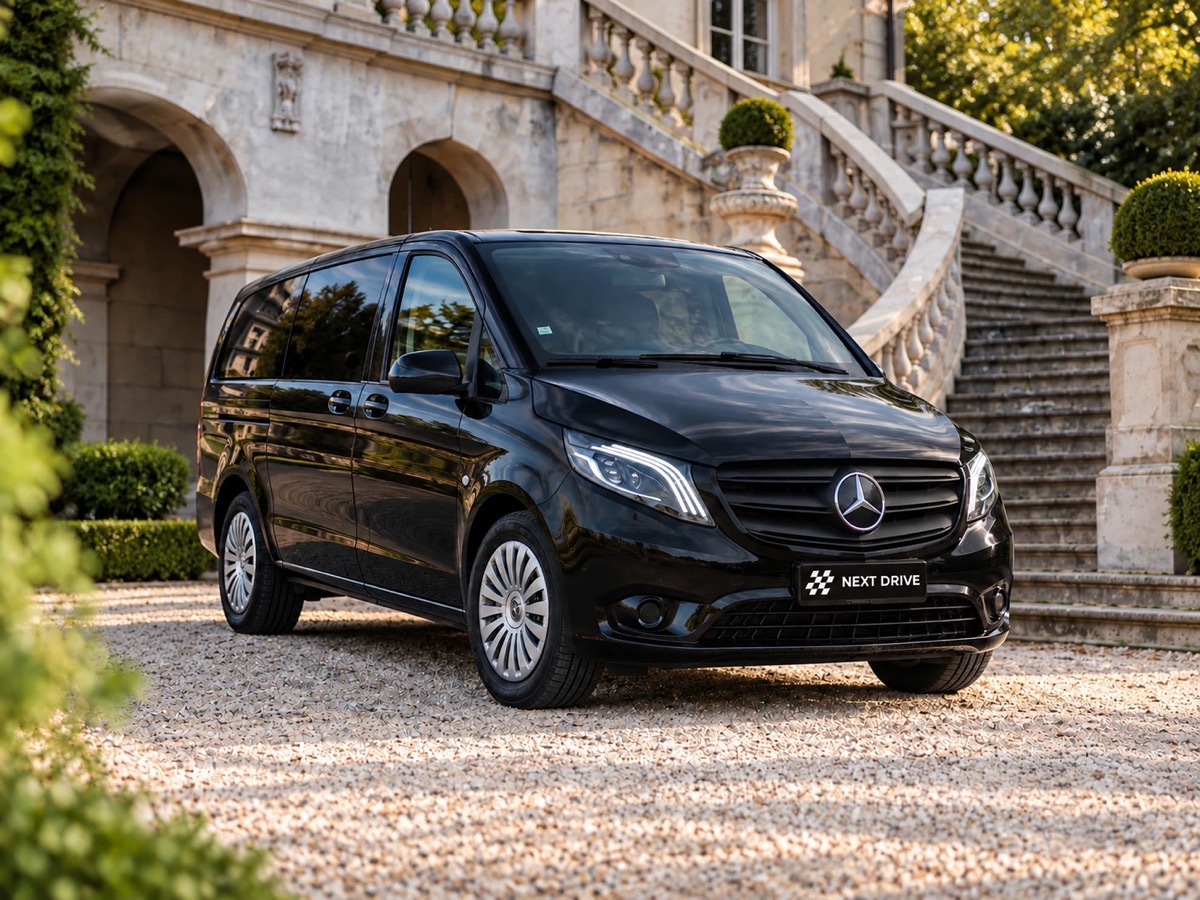
The vehicle for families and groups of friends: a premium Mercedes with rear air conditioning, room for everyone, the suitcases and the cases of wine from the cellars.
Address book
The Haeberlin family's house on the banks of the Ill: an institution of French gastronomy.
Jean-Yves Schillinger's restaurant, by the water in Little Venice.
A few places where we like to take our clients. We have no ties with any of them: you book and pay directly, we drive you there.
Good to know
Most are free or cost very little, especially if you buy. For a guided tasting in English or at a great house, it is best to book.
Your cases travel in the boot all day. For shipping abroad, many winemakers send the wine themselves.
September and October for the harvest and autumn colours, May and June for villages in bloom, December for the Christmas markets.
Many family cellars close on Sundays, or only receive visitors by appointment. We take this into account.
Frequently asked questions
Two or three, to really enjoy them. Beyond that you taste more than you discover, and the villages deserve a stroll too.
Yes, we suggest cellars to suit your taste: great houses, independent winemakers, crémant or grand cru producers. Tastings are paid directly to them.
Yes, it is the classic north-to-south route. We then drop you at your hotel in Colmar, or take you back to Strasbourg.
Yes. Colmar and the heart of the wine route are about an hour from Basel. We pick you up at your hotel or at Basel-Mulhouse airport and bring you back in the evening.
So that nobody has to drive after the tastings, and so that you choose the villages, the cellars and the pace — not a coach timetable. Your cases of wine travel safely in the boot until you get back to your hotel.
Your trip
Tell us your dates and what you would like to see: we will send you an itinerary and a firm quote, free and without obligation.
Rather talk it through?
Elsewhere in eastern France